


Nigeria’s micro, small and medium sized enterprises remain central to the country’s economic growth, employment and household incomes.
According to the NBS and SMEDAN MSME 2021 survey, as cited in PwC Nigeria’s MSME Survey 2024, MSMEs account for 96.9 per cent of businesses, 87.9 per cent of employment, 46.32 per cent of gross domestic product and 6.21 per cent of exports.
These figures underline the importance of Nigerian SMEs to job creation, innovation and inclusive economic development. They also explain why the health of the sector should command the attention of policymakers, financial institutions and investors. PwC’s report confirms the figures and identifies MSMEs as an important part of Nigeria’s economic fortunes.
The operating environment nevertheless remains difficult. Entrepreneurs continue to contend with elevated input costs, exchange rate volatility, infrastructure constraints and pressure on consumer purchasing power.
PwC’s MSME Survey 2024, which covered 557 operators across 13 sectors and 29 states, identified inadequate access to finance, unreliable electricity and multiple taxation among the principal constraints on business growth. The report also found that 69 per cent of surveyed businesses had not received government grants in the preceding 24 months.
Electricity shortages and fuel costs place additional pressure on business finances, forcing many enterprises to commit scarce working capital to basic operations instead of expansion.
A sector adapting under pressure
The picture is therefore mixed. Nigerian SMEs remain entrepreneurial and increasingly digital, but many are caught between the need to improve efficiency and a limited capacity to invest.
Informal bookkeeping can weaken credit applications. Fragmented payment and inventory systems can obscure cash flow. Expensive short term funding can also make otherwise promising growth difficult to sustain.
The financing gap is therefore about more than the availability of money. It is also connected to business structure, financial records, managerial knowledge, digital capacity and access to markets.
This is where financial institutions can create value beyond conventional lending. A strong SME banking proposition should combine affordable transactions, appropriate financing, digital tools, advisory support and market access. These services can help entrepreneurs become more structured, visible, bankable and resilient.
Fidelity Bank has built its SME strategy around this broader understanding. The bank’s approach combines financial products with advisory services, capacity building, digital support and opportunities for market access. This integrated model has strengthened its position as a leading partner to Nigerian entrepreneurs.
Reducing the cost of business banking
Transaction costs can place considerable pressure on a growing enterprise, particularly one processing large volumes. Fidelity Bank addresses this concern through the Fidelity Premium Business Account.
FPBA Variant 1 requires a minimum opening and operating balance of ₦100,000. The account offers up to ₦300 million in account maintenance charge free monthly debit turnover, provided the customer maintains the prescribed operating balance, remains within the turnover threshold and does not operate an overdraft facility on the account.
The ₦300 million threshold represents an increase from the ₦100 million limit contained in earlier product documentation. An April 2025 communication from Fidelity Bank’s SME Product Development Division confirmed the revised threshold as an updated feature of FPBA Variant 1.
FPBA Variant 2 requires customers to maintain an operating balance of ₦1 million and places no cap on monthly debit turnover. Account maintenance charges apply when the balance falls below the required operating threshold or when an overdraft facility operates on the account. The product also provides access to electronic banking, loan facilities and business advisory services.
For eligible businesses, these account structures can reduce avoidable transaction costs and preserve more funds for inventory, salaries, equipment and expansion.
The account options also recognise that businesses operate at different levels. An enterprise processing significant monthly transactions has different banking requirements from a smaller company that is still building its revenue base.
Finance aligned with business realities
Access to finance remains one of the major constraints confronting Nigerian MSMEs. Funding is most effective when its purpose, repayment structure and duration reflect the cash flow cycle of the business.
A retailer seeking inventory finance does not have the same requirements as a manufacturer acquiring equipment. A school expanding its facilities also has different cash flow considerations from a service company opening another location.
Fidelity Bank’s SME financing proposition is structured to address such differences through business financing solutions, low-cost accounts, advisory services and capacity building.
This combination is increasingly important in an environment where expensive short-term financing can weaken a growing enterprise. Appropriate financing can help a business fulfil orders, acquire productive assets and pursue expansion without creating unsustainable repayment pressure.
Fidelity Bank has also participated in the disbursement of government backed MSME intervention funds and has supported qualified businesses through its branch network, digital banking platforms and relationship management structure.
Building digital and managerial capacity
Many SMEs face difficulty securing appropriate financing because their records do not provide a complete picture of revenue, expenses, inventory and cash flow.
Digitising these operations can help business owners make better decisions, control costs and demonstrate their capacity to meet financial obligations.
Fidelity Bank has addressed this challenge through programmes that support digital adoption, business formalisation and operational efficiency.
The Fidelity SME Empowerment Programme was officially launched on 23 July 2025 at the Fidelity SME Hub in Gbagada, Lagos. The initiative was designed to equip 100 growth ready SMEs with ERPRev enabled point of sale systems and business support tools at no cost to the beneficiaries.
Participating businesses received business software, receipt printers, barcode scanners, inventory data support, financial and bookkeeping training, branding assistance and six months of post installation monitoring. The programme also included masterclasses and networking opportunities.
The intervention addressed a practical barrier to SME growth. Better records can strengthen financial transparency, support business planning and help entrepreneurs become better prepared for appropriate financing.
It also illustrates the value of supporting entrepreneurs beyond the point at which a product is sold or a facility is disbursed. Sustained monitoring, training and operational assistance can improve the prospects of long-term business success.
Knowledge, visibility and market access
Access to knowledge and business networks can be as valuable as access to finance. Entrepreneurs need practical guidance on pricing, financial management, product quality, digital sales, exports and long-term planning.
Fidelity Bank supports this need through the Fidelity SME Hub, its SME Masterclass Series, the Fidelity SME Forum and the Quarterly Business Forum.
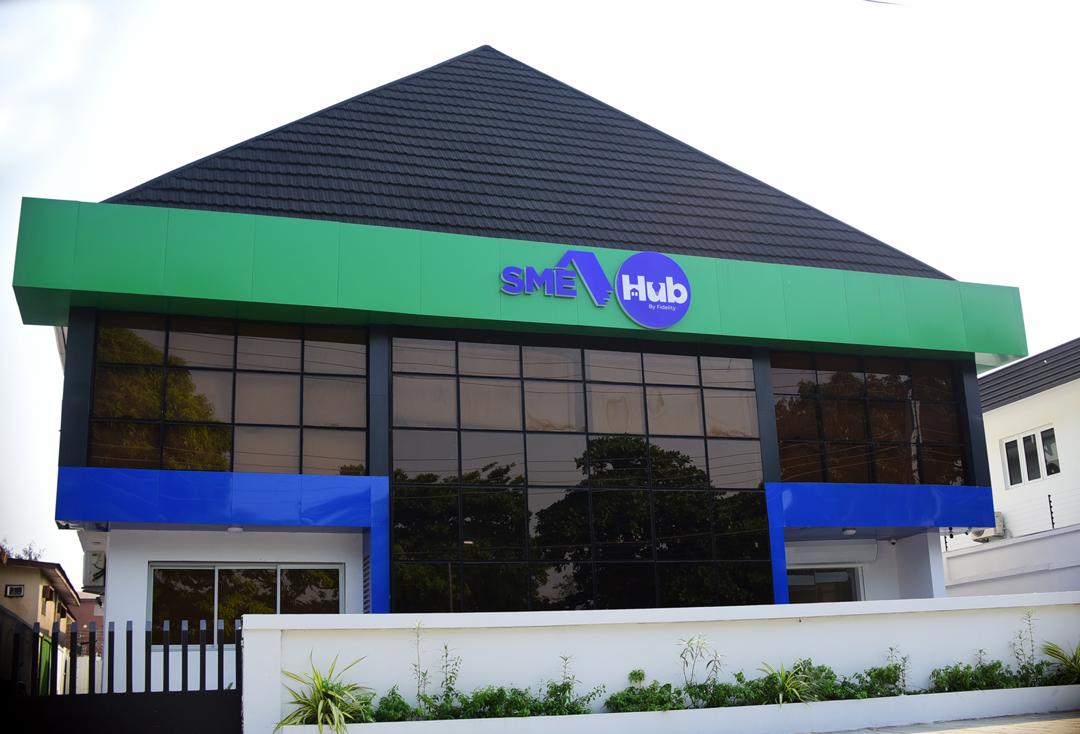
The Fidelity SME Hub in Gbagada provides entrepreneurs with access to training facilities, meeting rooms, networking spaces, advisory support and creative studios for content production.
The Quarterly Business Forum connects SME founders with business leaders, policymakers and industry experts for discussions on business growth, trade, innovation and sustainability. The SME Masterclass Series also provides practical guidance in areas such as pricing, product quality, online sales, business visibility and preparation for international expansion.
Fidelity Bank also uses its radio and digital platforms to share business knowledge with entrepreneurs. Eligible FPBA customers may receive opportunities to feature on the Fidelity SME Radio Programme, subject to the applicable terms and selection arrangements.
These platforms complement financing by improving access to expertise, professional networks and market visibility. They also give the bank opportunities to engage directly with entrepreneurs and gain a clearer understanding of the realities confronting businesses across different sectors and regions.
A recognised commitment to SME development
Fidelity Bank’s support for small businesses extends across finance, advisory services, capacity building, digital enablement and market access.
The bank’s SME strategy has also received external recognition. In 2026, Fidelity Bank received the Development Bank of Nigeria Service Ambassadors Award for the highest impact on MSMEs accessing credit for the first time.
The recognition reflects the bank’s work in onboarding previously unbanked or credit excluded businesses, deepening financial inclusion and expanding access to formal credit. It followed the Development Bank of Nigeria Innovation Award received by the bank in 2025 for its contribution to innovative financial products and services for MSMEs.
Fidelity Bank also supports exporters and businesses seeking international opportunities through trade and market access programmes. Its partnerships and enterprise development initiatives connect entrepreneurs with knowledge, networks and markets that can support sustainable expansion.
These interventions demonstrate a multidimensional approach to SME development. The emphasis is on combining finance with the capabilities and relationships businesses require at different stages of growth.
From resilience to sustainable scale
No financial institution can independently resolve every structural challenge facing Nigerian SMEs. Reliable electricity, stable policies, efficient logistics and a supportive regulatory environment remain essential.
Banks can still play a defining role. They can reduce transaction costs, finance productive activity, support digital adoption and connect businesses with knowledge, networks and markets.
Entrepreneurs should therefore evaluate banking relationships based on more than the availability of an account or loan. Monthly turnover, average balances, financing purpose, repayment capacity and operational needs should guide the selection of financial products and business support services.
Fidelity Bank’s approach provides a practical model. Its combination of transactional savings, appropriate financing, advisory support, capacity building, digital tools and market access demonstrates how banking can respond to the practical needs of Nigerian SMEs.
Nigeria’s economic prospects remain closely tied to the performance of its small businesses. Helping these enterprises become more structured, competitive and resilient is an investment in jobs, innovation and national development.
Fidelity Bank has positioned itself at the centre of this effort. By supporting entrepreneurs with finance, knowledge, technology and access to markets, the bank continues to reinforce its standing as a market leader and trusted partner in Nigeria’s SME sector.
