

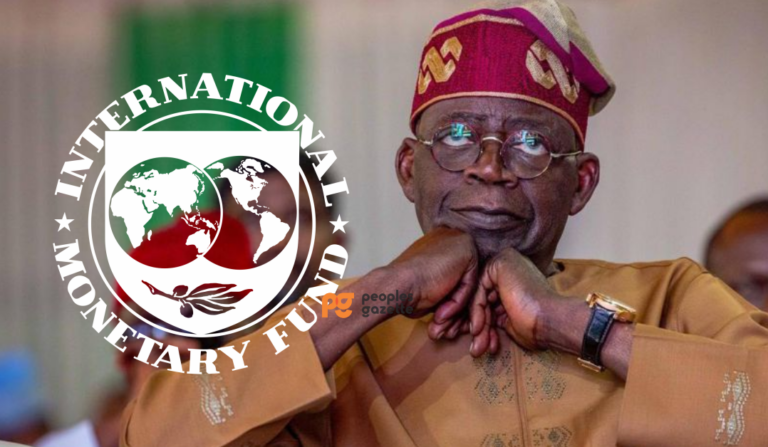

As more serving and former public office holders troop into the All Progressives Congress (APC), praising President Bola Ahmed Tinubu for his supposed economic wizardry, the latest report by the International Monetary Fund (IMF) tells a very different story, one that shatters the myth of Nigeria’s “economic revival” under his administration.
In its newly released Regional Economic Outlook for Sub-Saharan Africa, the IMF revealed that Nigeria is absent from the list of Africa’s fastest-growing economies. Instead, smaller nations such as Benin Republic, Côte d’Ivoire, Ethiopia, Rwanda, and Uganda are leading the continent’s growth trajectory and are now among the world’s fastest-expanding economies.
According to the IMF’s African Department Director, Abebe Selassie, these countries have achieved strong, sustained growth through fiscal discipline, policy reforms, and industrial investments and not mere rhetoric or exchange rate experiments. Their governments have demonstrated consistency, credibility, and discipline, resulting in macroeconomic stability and investor confidence.
By contrast, Nigeria’s growth remains below potential, with rising debt, double-digit inflation, and dwindling external reserves. Despite the government’s claims of progress, the IMF’s assessment makes it clear that Nigeria’s economy, though showing minor improvements lags significantly behind many of its African peers.
“Several countries in the region — Benin, Côte d’Ivoire, Ethiopia, Rwanda, and Uganda are among the fastest-growing economies in the world,” Selassie said, underscoring that these nations’ success is rooted in genuine reform and fiscal prudence.
The IMF projects overall growth in Sub-Saharan Africa to stabilise at 4.1 per cent in 2025, while Nigeria’s economy is expected to expand by only 3.9 per cent, despite recent upward revisions. The message is clear: Nigeria is growing slower than the regional average, even as its government celebrates “economic recovery.”
Meanwhile, countries like Benin Republic, Nigeria’s smaller neighbour are outperforming Africa’s largest economy, recording stronger growth rates due to sustained structural reforms, better fiscal management, and a stable investment climate.
The IMF also raised concerns about Nigeria’s rising domestic debt, warning that the government’s heavy reliance on local banks for financing could threaten financial stability. This, coupled with persistent inflation and high debt service costs, continues to crowd out investment and limit development spending.
Selassie noted that in about half of Sub-Saharan countries, including Nigeria, domestic banks now hold most public debt, a “double-edged sword” that risks straining financial systems and deepening economic fragility.
“It has been really good to see the region showing strong resilience,” he said, “but this will continue to be tested in the coming months as pressure points, including high debt service costs and inflation, persist.”
While the IMF commended Nigeria’s “policy direction” as broadly positive, citing improvements in tax reform, exchange rate transparency, and monetary tightening, — it also warned that these efforts remain insufficient to place the economy on a sustainable growth path. Inflation, though slightly easing, remains among the highest in Africa, and poverty levels continue to rise.
Indeed, the World Bank recently disclosed that 139 million Nigerians are living in poverty, an alarming contrast to the prosperity narrative pushed by those defecting politicians who attribute “economic genius” to President Tinubu.
The Propaganda of Progress
In recent months, several governors, senators, and political leaders have defected to the ruling APC, justifying their decision with claims that Tinubu has restored investor confidence and revived Nigeria’s economy. Yet, the IMF’s verdict is a sobering reminder that economic success cannot be built on propaganda.
Rwanda, Benin, and Côte d’Ivoire — all smaller economies with fewer resources — have achieved faster growth through institutional discipline, stable policies, and reduced corruption. Nigeria, despite its vast human and natural resources, remains stuck in cycles of inflation, debt, and policy inconsistency.
The IMF’s findings expose a disturbing disconnect between Nigeria’s political class and the economic reality facing millions of citizens. While elites jostle for positions in the ruling party under the illusion of an “economic miracle,” the country still battles crippling food inflation, high unemployment, and currency instability.
If anything, the IMF report proves that the true measure of economic performance is not in political slogans but in tangible progress which are stable growth, lower inflation, rising incomes, and sustainable debt levels. And in those metrics, Nigeria continues to lag far behind its African peers.
Now that the IMF has spoken plainly, indicating Nigeria is not among Africa’s fastest-growing economies, economic experts maintained that until the government deepens reforms, restores electricity supply, broadens the productive base, and reduces its dependence on oil, no amount of political defection or orchestrated praise-singing will change that fact.
