

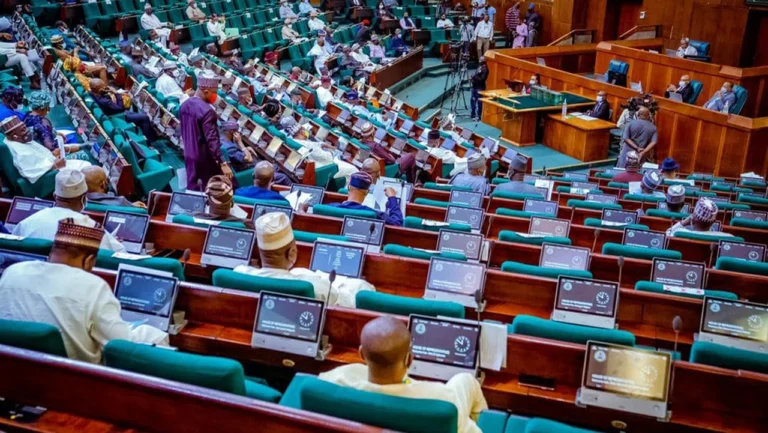

In a landmark move aimed at addressing Nigeria’s growing security challenges, the House of Representatives on Thursday passed the constitutional amendment bill seeking the establishment of state police across the federation.
The passage of the bill marks a significant step toward decentralising Nigeria’s policing system, which has remained under the exclusive control of the Federal Government since the country’s return to democratic rule in 1999.
The proposed legislation seeks to amend relevant provisions of the 1999 Constitution to allow individual states to establish and operate their own police formations alongside the existing Nigeria Police Force. The move has been widely advocated by security experts, state governors, and stakeholders who argue that localised policing will improve intelligence gathering, response times, and community security.
Speaking ahead of the vote, Deputy Speaker of the House and Chairman of the House Committee on Constitution Review, Benjamin Kalu, said the bill had become necessary in view of rising incidents of terrorism, banditry, kidnapping, communal clashes, and other violent crimes across the country. He noted that extensive consultations had been conducted with relevant stakeholders, including state governors, security agencies, and the executive arm of government.
Supporters of the bill maintain that Nigeria’s current centralised policing structure has struggled to effectively address diverse security threats across the country’s regions. They argue that state police will enhance local ownership of security initiatives and strengthen law enforcement capabilities at the grassroots level.
However, the proposal has also generated concerns among critics who fear that state governors could misuse state-controlled police forces for political purposes. Others have raised questions about funding, operational standards, accountability mechanisms, and coordination between state and federal law enforcement agencies.
For the constitutional amendment to become law, it must secure approval from the Senate and subsequently receive the endorsement of at least two-thirds of the 36 State Houses of Assembly before being transmitted for presidential assent.
The passage of the bill by the House of Representatives is being viewed as one of the most significant security reforms undertaken by the National Assembly in recent years and could fundamentally reshape Nigeria’s security architecture if fully enacted.
