

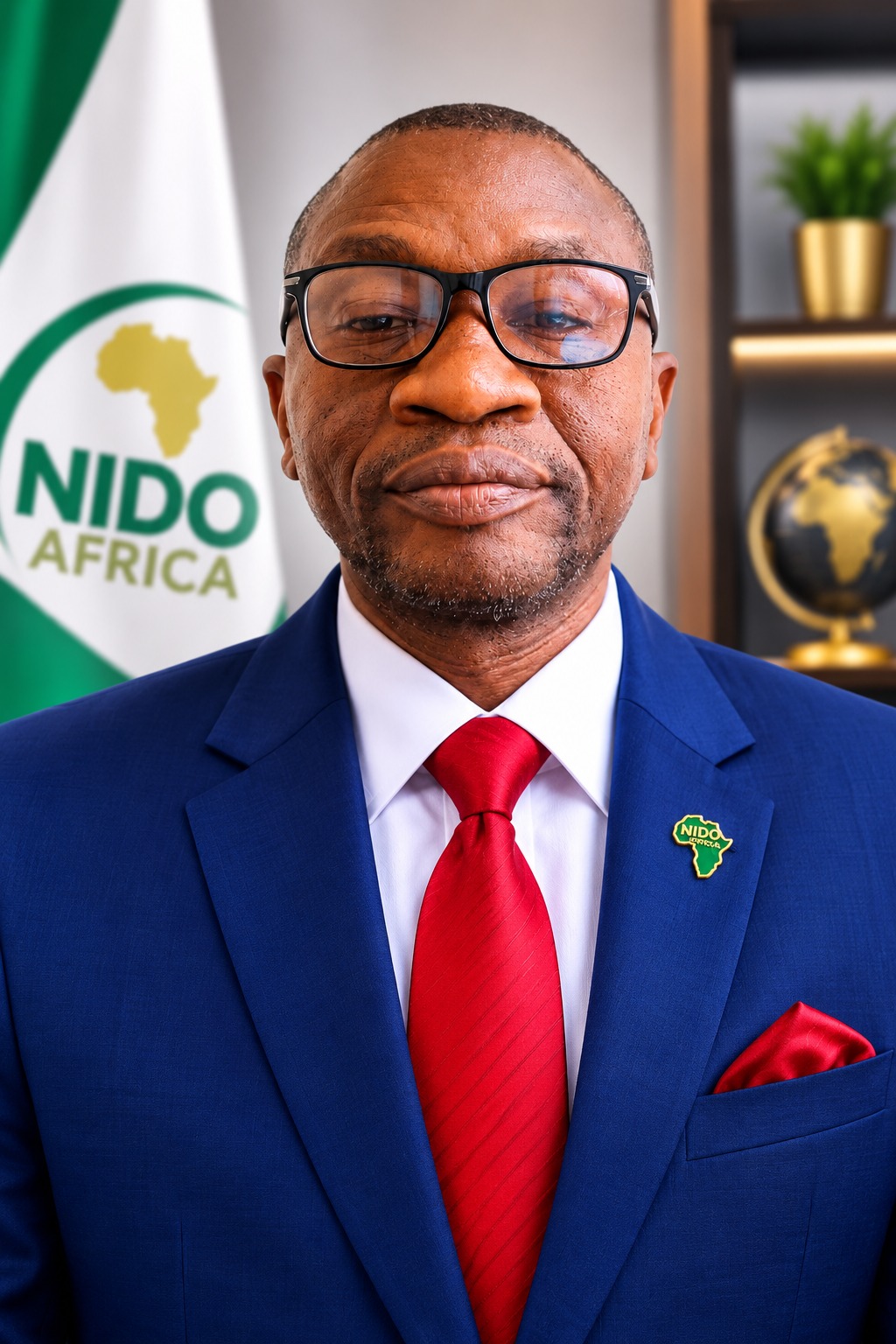

The Nigerian in Diaspora Organisation (NIDO) Africa has inaugurated its Women’s League as part of efforts to strengthen the participation of Nigerian women in diaspora leadership, economic development, policy advocacy and community welfare across the African continent.
The Continental Chairman of NIDO Africa, Dr. Fatoye Olufemi, disclosed this on Saturday during the organisation’s Leadership Celebration, Award Ceremony and formal inauguration of the Women’s League.
Speaking virtually with journalists after the ceremony, Fatoye said the establishment of the Women’s League was informed by the growing contributions of Nigerian women to diaspora communities and the need to provide them with a structured platform to translate their efforts into greater socio-economic impact.
According to him, Nigerian women across Africa have remained central to community support, entrepreneurship, family welfare and the preservation of Nigerian culture, but their contributions have often been fragmented and operated without a dedicated institutional framework.
He said the current economic realities across the continent had made it necessary for women to move beyond passive participation in diaspora affairs and become more actively involved in economic initiatives, leadership, policy formulation and community development.
Fatoye said the Women’s League would serve as a major platform for institutional inclusion, ensuring greater participation of women in leadership, decision-making and policy processes across NIDO Africa’s chapters.
He explained that the League would also be responsible for developing and implementing women-focused development projects, welfare programmes and business networks.
Beyond NIDO Africa, he said the organisation would provide a structured support system for Nigerian women and families facing settlement, integration, legal and social challenges in their host countries.
“The Women’s League will function as a direct conduit connecting diaspora women professionals with community development projects, mentorship programmes and grassroots initiatives back home in Nigeria,” he said.
The NIDO Africa chairman identified limited access to business financing, trade networks, credit facilities and formal employment as some of the major challenges confronting Nigerian women in the diaspora.
He also listed work-permit restrictions, language barriers, administrative difficulties and discrimination as challenges that could limit the ability of Nigerian women to fully participate in the economies of their host countries.
Family welfare and social isolation, particularly where women lack traditional support networks, were also identified as areas requiring institutional attention.
To address these challenges, Fatoye said the Women’s League would establish a NIDO Diaspora Women’s Business Network to promote peer-to-peer trade, facilitate access to micro-investment opportunities and provide skills development programmes suited to the economic realities of host countries.
He added that the League would collaborate with regional legal bodies, civil society organisations and diplomatic missions to provide legal assistance, rights education and advocacy for Nigerian women experiencing discrimination or other forms of vulnerability.
On family welfare, Fatoye said localised support committees would be created to provide emergency assistance, health guidance, educational placement for children and psychosocial support where necessary.
The NIDO Africa chairman said the organisation was also determined to build stronger links between Nigerian women living abroad and women in Nigeria.
He disclosed that structured virtual and physical mentorship programmes would be introduced to enable professionals in the diaspora to transfer knowledge and expertise to women-led businesses, students and young entrepreneurs in Nigeria.
He said NIDO Africa would also explore a diaspora-to-home trade corridor that would connect Nigerian women farmers, artisans and manufacturers with markets across Africa.
According to him, such initiatives would help create opportunities for women in Nigeria while strengthening economic relationships between Nigerians at home and in the diaspora.
Fatoye further announced plans to mobilise diaspora resources towards healthcare, maternal welfare, digital literacy and girl-child education in underserved Nigerian communities.
He said the organisation would also organise joint policy and advocacy dialogues bringing together female leaders in Nigeria and the diaspora to develop proposals capable of advancing economic inclusion and national development.
Looking ahead, the Continental Chairman said NIDO Africa had a three-year vision of transforming the Women’s League into a functional continental network with strong institutional structures and measurable economic impact.
He said the organisation planned to establish active Women’s League directorates across all registered and active NIDO Africa chapters on the continent.
Another major objective, he disclosed, was the establishment of a NIDO Africa Women Development Fund to provide seed grants, business loans and trade facilitation for women-led small and medium-scale enterprises.
Fatoye also said the Women’s League would seek to position Nigerian women as significant participants in the African Continental Free Trade Area (AfCFTA), through training and support for women entrepreneurs engaged in cross-border trade.
He expressed the ambition of making the Women’s League a recognised continental voice on issues relating to women, migration and development, with stronger engagement with institutions including the African Union, ECOWAS and national governments.
In his address at the ceremony, Fatoye described the inauguration as a “historic transition” in the story of NIDO Africa’s continental governance, stressing that the Women’s League was not created to compete with men within the organisation but to complement existing structures and harness the leadership, intellect and problem-solving capacity of Nigerian women across Africa.
He said the League would focus on five strategic areas, including bridge-building and unity, community and economic impact, policy advocacy, mentorship and empowerment, as well as cultural diplomacy.
According to him, the League would work to heal divisions and foster unity among Nigerian communities in African host countries while supporting projects in education, healthcare, small-business development and welfare.
He added that women would also play an important role in projecting Nigeria’s culture, dignity and positive image across the continent.
At the ceremony, NIDO Africa also honoured its past continental leaders, including the late Dr. Babatunde Lee, who served from 2001 to 2014; Dr. Kingsman Chikelu, who served from 2016 to 2022; and Ambassador Titus Alagba, who served from 2023 to 2026.
Fatoye paid tribute to their contributions to the growth and development of the organisation, saying the new Women’s League was part of the effort to build on the foundation laid by previous leaders.
He also acknowledged the contributions of the founding women leaders of the League, including Hon. Ms. Owolabi Mary Olukemi, Hon. Dr. Mrs. Olamma Ojukwu, Hon. Mrs. Jennifer Annie Koko Conteh, Hon. Mrs. Nkechi Joyce Arizor, Hon. Mrs. Olufunke Amu, Hon. Adesuwa Balogun, Hon. Mrs. Anna Edem, Hon. Mrs. Adepeju Kafilat Bello and Hon. Mrs. Chinyere K. Nwabudike.
The NIDO Africa chairman expressed confidence that the initiative would strengthen the organisation’s capacity to unite Nigerians across Africa and contribute to the socio-economic development of communities both in the diaspora and in Nigeria.
- Advertisement -
