

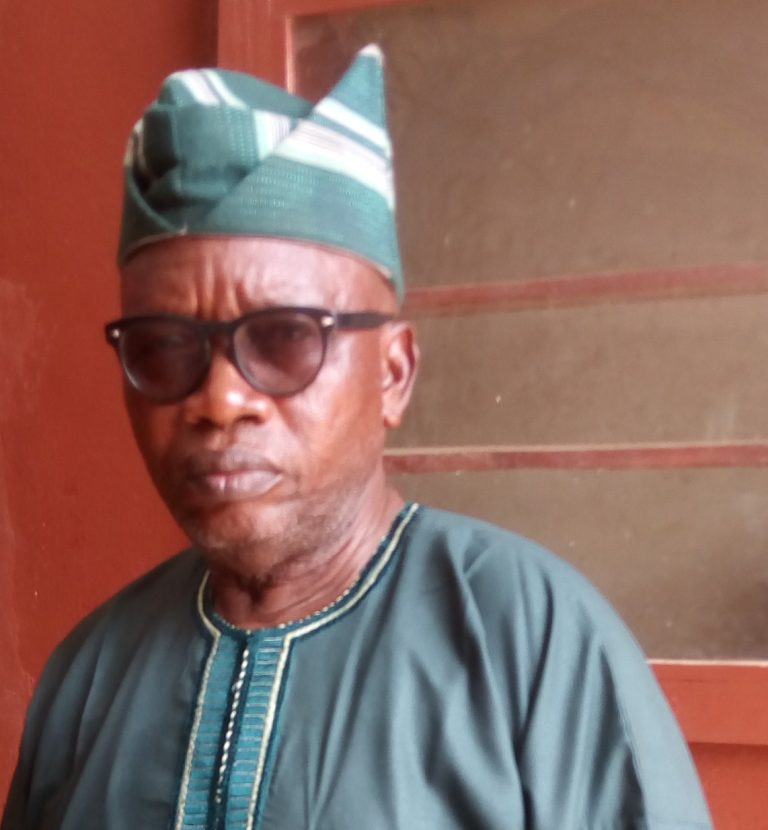
The President of the Association of Mogajis in Ibadanland, Chief Asimiyu Ishola Adepoju Ariori, has commended successive administrations in Oyo State for contributing to the development of Ibadan and the state at large, while calling for renewed attention to education and sustained unity in chieftaincy administration.
Chief Ariori, who is also the Mogaji of the Ariori Family and Chairman of the Land Settlement Committee under the Olubadan of Ibadanland, spoke recently with WesternLifeNewsNG as part of activities marking Oyo State’s 50th anniversary.
Reflecting on the state’s journey, the Mogajis’ leader noted that every government that has come to power in Oyo State has made visible contributions to development, particularly in infrastructure and urban management.
“There has never been a government in Oyo State that did nothing. Each administration has tried, and those who came later often worked better than those before them. Look at the garages built across the state and the way the transport sector has been reorganised. Today, we no longer hear of frequent clashes among road transport unions. That is progress,” he said.
He described the reforms in the transport sector as a major gain for peace and social order, adding that corporate discipline and calm engagement have replaced chaos and violence.
On traditional institutions, Chief Ariori praised efforts to revive and strengthen the Oyo State House of Chiefs, noting that it took a long time before meaningful attention was given to the institution.
“For many years, the House of Chiefs was neglected, but now things are being done to restore its dignity. Government may not please everybody, but when the right thing is done, history will justify it,” he said.
Speaking on education, the Mogajis’ president expressed concern over what he described as a decline in educational standards when compared with earlier decades, blaming not only government but also parents and society at large.
“Education is no longer what it used to be,” he said.
“But it is not the government alone that is at fault. Parents today have abandoned their responsibilities. In the old days, parents monitored their children closely and worked with teachers. Now, many parents believe it is solely the teacher’s duty,” he added.
He recalled the introduction of a token school levy during the administration of the late Governor Abiola Ajimobi, explaining that the policy was meant to encourage parental involvement in public education.
“When Ajimobi introduced a ₦1,000 levy, it was not to punish parents but to make them feel involved in their children’s education. When the present administration stopped it to fulfil its free education promise, parental commitment further reduced,” he said.
According to him, restoring educational standards will require joint responsibility from government, parents, teachers and students.
On chieftaincy reforms in Ibadanland, Chief Ariori declared strong support for the actions taken by both former Governor Ajimobi and Governor Seyi Makinde, describing the reforms as necessary and overdue.
“I personally led the Mogajis to support the reform of the 1957 Chieftaincy Edict. The majority of us were in support. Only a minority opposed it. The intention was right, even if the approach at that time caused disagreements,” he said.
He explained that Ibadan’s traditional system is unique, describing the journey to the stool of the Olubadan as long, orderly and deeply rooted in history.
“Ibadan is a warrior city, and its chieftaincy system is God-ordained. Any reform must build on what already exists, not destroy it,” he noted.
Commending Governor Makinde, Chief Ariori said the governor, being an indigene of Ibadan, identified and corrected lapses in the earlier reforms, resulting in greater stability.
“Since the reforms were perfected, have we seen any crisis in Ibadan? No. That tells you it was the right thing to do,” he said.
On the long-standing agitation for the creation of Ibadan State, the Mogajis’ president expressed optimism that the dream could become a reality, attributing renewed hope to the efforts of the current Olubadan of Ibadanland, Oba Rashidi Ladoja, and other stakeholders.
“Ibadan has everything that qualifies it to be a state. State creation is difficult under civilian governments, but with proper processes and the support we are seeing now, it can happen,” he stated.
Chief Ariori concluded by expressing confidence that Ibadanland would continue to grow in unity and stature, praying that ongoing efforts would yield lasting benefits for future generations.
