

As an ocean of green and white sweeps across our streets, Independence Day reminds us that this day is not a mere ritual of rejoicing, but a solemn renewal of our covenant as a people.
My thoughts return each October 1 to the words of Sir Abubakar Tafawa Balewa in 1960: “This is a wonderful day, and it is all the more wonderful because we have awaited it with increasing impatience…we have acquired our rightful status, and Nigeria now stands well-built upon firm foundations.” His words remain alive today, urging us not to rest in nostalgia but to labour with courage toward the destiny they envisioned.
Independence Day offers Nigeria a rare opportunity to pause and reflect. It is a moment to honour our profound history, but more importantly, to look ahead to the next chapter in our great story. Despite the challenges of today, I remain optimistic when I consider the strides our country has made since 1 October 1960. Nigeria has grown from a population of about 45 million at independence to more than 237 million which is the largest in Africa and the 6th largest in the world today. We have moved from just a handful of universities in 1960 to more than 260 tertiary institutions today. Our creative industries are global forces, with Nollywood supporting hundreds of thousands of direct jobs and, by broader estimates, over 1,000,000 direct and indirect jobs, and contributing roughly N1.9–N2.0 trillion to the economy.
Yet optimism alone will not carry us forward. For the twenty-first century will be the African Century, and it is not a question of if, but of when. The true test is whether Nigeria will rise as the continent’s vanguard or stumble as a colossus with feet of clay. Without justice, scale becomes spectacle; and without equity, abundance breeds misery. Nowhere is this clearer than in the poverty that scars our land. The National Bureau of Statistics’ Multidimensional Poverty Index revealed that 63% of Nigerians, some 133,000,000 men, women, and children, are deprived of health, education, and decent living standards. The World Bank confirms that nearly one in three Nigerians live below the global poverty line of $2.15 a day. Humanitarian agencies further warn that about 31 million of our people face acute food insecurity, while a third of children under five suffer stunted growth. These are not abstract figures; they are broken lives, and they demand a national response as urgent as war.
Security remains the greatest test of our generation. Banditry, insurgency, and communal violence have sown terror across our land, displacing millions and crippling markets. United Nations data shows more than 2.3 million Nigerians internally displaced by the end of 2024. Conflict trackers record thousands of violent incidents that have shattered livelihoods and hope. No nation can prosper while its people live in fear. Peace is not optional; it is the precondition for progress, the anchor of prosperity, and the oxygen of national renewal.
Closely linked to insecurity is Nigeria’s infrastructure deficit, which the African Development Bank estimates at over $100 billion. Our power sector is a glaring example. While South Africa generates more than 40,000 MW of electricity, Nigeria struggles with less than 4,853.69 MW on average for a population four times larger. Our roads tell the same story: more than 30% of federal roads are in poor condition, and only 1 in 5 rural communities is linked to an all-season motorable road. Broadband penetration stands at just 45%, far below global averages. This infrastructure gap is not an abstract figure; it is the barrier that prevents farmers from getting produce to market, prevents young entrepreneurs from accessing digital opportunities, and prevents patients from reaching hospitals in time. Infrastructure should be our launchpad into greatness, yet it has become the chain holding us down.
Corruption makes this tragedy complete. When public funds become private spoils, classrooms stay empty, hospitals remain broken, and electricity never flows. Illicit financial flows bleed our treasury of billions that should be building schools, clinics, and power plants. This is not merely inefficiency; it is treason against our future. Nigeria is estimated to lose $18 billion annually to illicit financial flows, funds that could have built hospitals, schools, and power plants. Instead, they are siphoned into private pockets, deepening poverty and eroding trust in government. Corruption does not only weaken our institutions; it undermines the very belief that progress is possible.
However, even in the midst of these staggering challenges, hope is not extinguished. If we can forge peace, everything else becomes possible We can still bend the arc of history if we commit to three urgent tasks. First, to place security at the heart of national renewal: forging a unified, accountable doctrine that integrates military force, intelligence, policing, and community peacebuilding, while safeguarding human rights. Second, to launch an infrastructure revolution which will be financed with transparency, driven by public-private partnership, and executed with the discipline of a nation on a mission. Third, to uproot corruption with finality, ensuring that every naira is traceable, every contract enforceable, and every official accountable, regardless of station.
Above all, we must lift the young. With over 70% of our people under 30, Nigeria’s future stands in classrooms, vocational centres, farms, and tech hubs. We must bind education to enterprise, scale digital and vocational training, and direct meaningful budgetary commitments to youth employment and innovation. This is not welfare. it is the master strategy for national greatness.
On this day, as the words of Abubakar Tafawa Balewa echo in my head, I remain unshaken in my optimism. For Nigeria to take its next great step forward, any government of the future must place security at the very heart of its agenda. Without peace, nothing else can flourish. We must develop a coherent national security strategy, one that unifies the military, police, and intelligence services under a single coordinated doctrine, and equips them with the modern tools of surveillance and response, from drones to satellites, that will allow us to outsmart insurgents and restore peace to our land.
Peace will unlock the infrastructure we so urgently need. It will allow roads and railways to connect our towns and cities. It will enable power grids to light up homes and factories, and digital networks to support a modern economy. It will allow schools to reopen without fear and hospitals to function without interruption. But this will only be possible if we also confront corruption head-on, ensuring that every naira budgeted for development is accounted for. Citizens must be able to track public spending openly, and no official must be above the law.
Nigeria has never shied away from its challenges. Our history is full of obstacles that once seemed insurmountable, yet we overcame them. In each season, we rose because we chose courage over fear, unity over division, and hope over hopelessness. The urgent task before us now is to build a Nigeria where no Nigerian is left behind, and where no community is consigned to despair. If we meet this test, we will awaken the Nigeria of our dreams: a nation where schools and hospitals are beacons of service, where roads and railways stitch our land into unity, where power grids illuminate every home, where digital networks link us to the world, and where we can banish and say a total farewell to hunger and poverty not as slogans, but as lived reality.
This is the true promise of independence. This is the noble vision our founding fathers entrusted to us. This is the vision we must dare, together.
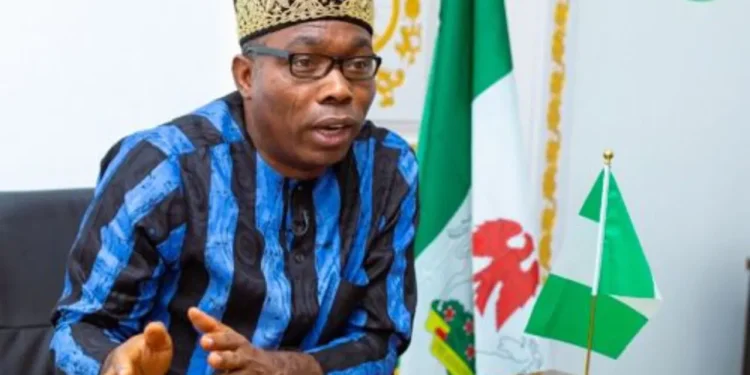
Adebayo, SDP leader and the party’s 2023 presidential candidate, writes from Ondo.
