

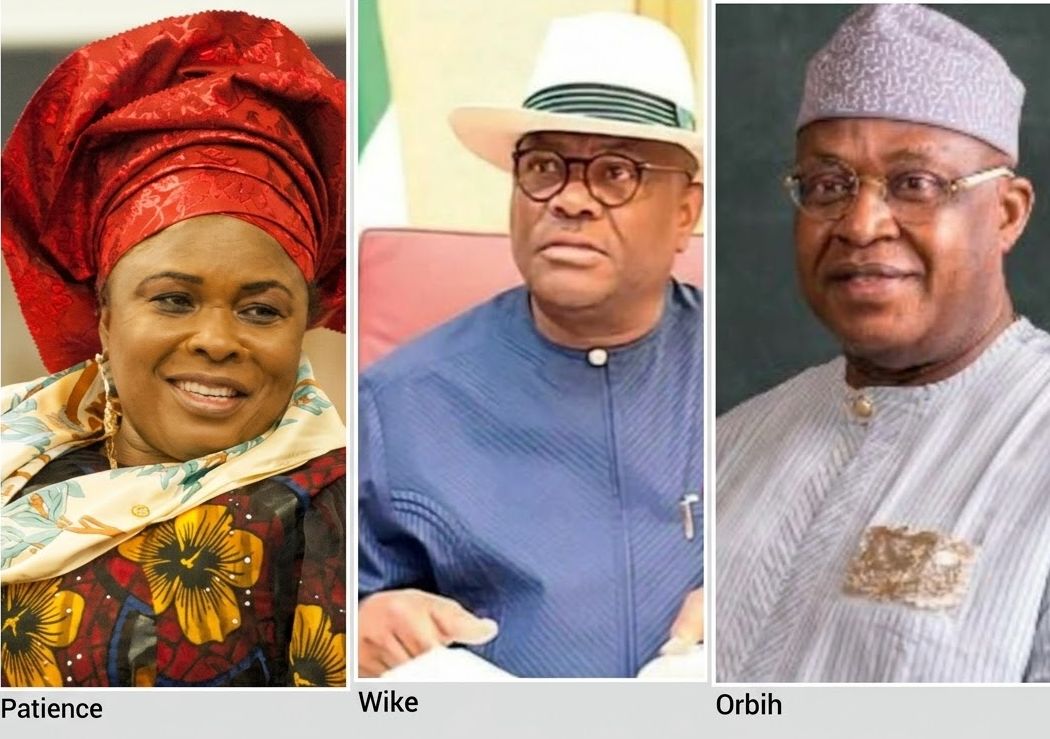

There is something revealing about the way politicians remember the people who helped them rise to power. For some, gratitude is a public virtue; for others, it appears to be a selective exercise, extended generously to some benefactors while others who played consequential roles are left in the shadows of history.
This contradiction came into sharp focus on Wednesday in Abuja when the Minister of the Federal Capital Territory, Nyesom Wike, paid tribute to the late National Vice-Chairman of the Peoples Democratic Party (PDP), South-South, Chief Dan Orbih, whom he credited with helping to make his governorship ambition a reality.
Speaking at a night of tributes organised in honour of Orbih, who died on August 31, Wike recalled the political struggles surrounding his ambition to become governor of Rivers State. Reflecting on his journey from governor to minister, he declared: “Today I am a Minister of the FCT; yesterday I was a governor. Who did God use for me to become governor? It was Dan.”
It was a touching acknowledgment of a departed political ally, and there is nothing wrong with Wike publicly recognising Orbih’s contribution. Indeed, those who stand by politicians during difficult political battles deserve to be remembered and honoured.
But Wike’s declaration raises a legitimate question: was Dan Orbih the only person God used to make his governorship ambition a reality?
If the minister was recounting the full story of his emergence as governor in 2015, rather than highlighting the contribution of one particular ally, then his account would appear incomplete without acknowledging the role attributed to former President Goodluck Jonathan and his wife, former First Lady Patience Jonathan.
The issue is not whether Orbih played a role. It is whether the public account of Wike’s political rise should recognise only one contributor while overlooking other influential figures whose interventions were widely discussed in the political history of Rivers State.
Wike’s emergence as the PDP candidate in the 2014 governorship contest, ahead of the 2015 general election, did not occur in a political vacuum. It unfolded amid intense rivalry within the party, a bitter confrontation between the administration of then Governor Rotimi Amaechi and the PDP leadership, and high-stakes calculations over who would succeed Amaechi.
Wike, a former local government chairman and minister of state for education, was seeking to succeed Amaechi, who had become a fierce political opponent of the Jonathan administration after falling out with the PDP leadership.
One of the sensitive dimensions of the contest was that Wike and Amaechi were both from Ikwerre, a fact that featured prominently in the political calculations surrounding succession. The question of whether another Ikwerre politician should succeed Amaechi was part of the broader political debate, even as Wike’s supporters advanced their own arguments for his candidacy.
It was within this complicated political environment that Patience Jonathan was reported to have played an important role in persuading her husband to support Wike’s ambition.
The significance of this reported intervention cannot simply be wished away. The influence of a president and the political weight of his wife could be consequential in a party contest where federal power, party machinery and competing interests converged.
To be clear, political influence does not automatically translate into sole responsibility for a candidate’s emergence. Wike had his own political network, supporters, strategists and loyalists. Orbih may well have been among those whose commitment proved invaluable. But acknowledging these contributions should not require erasing the others.
If the Jonathan family’s intervention helped create the political conditions that favoured Wike’s emergence, then their place in that story deserves public recognition as well.
The problem with Wike’s declaration is not that he thanked Orbih. It is the impression that can be created when a politician speaks so categorically about the divine hand behind his rise without offering a fuller account of the human hands involved.
When he asked, “Who did God use for me to become governor?” and answered, “It was Dan,” he presented Orbih’s contribution as the answer to a question that, in reality, could have several answers.
Was Orbih important? Certainly, according to Wike’s own account.
Was he the only person whose political intervention, support or influence contributed to Wike’s victory? That is a much broader historical question, and it would be difficult to answer it honestly without considering the Jonathan family’s role alongside the contributions of other political actors.
This is where the minister’s political memory deserves scrutiny.
Wike is not a political novice struggling to understand the complexities of power. He has occupied strategic positions in the PDP, served as governor of Rivers State and now holds one of the most prominent ministerial offices in President Bola Tinubu’s administration.
He understands how political victories are assembled: through negotiations, alliances, party structures, personal loyalty, influential endorsements and, sometimes, interventions from the highest levels of government.
He should therefore understand that the history of his emergence cannot reasonably be reduced to the contribution of one individual.
A public tribute is naturally shaped by the person being honoured. Wike was speaking at an event dedicated to Orbih, and it was entirely appropriate for him to focus on the deceased’s contribution. That context deserves consideration.
Yet, the categorical nature of his statement invites a wider discussion, particularly because Wike’s political relationship with the Jonathan family has long been a subject of public interest.
Patience Jonathan’s reported role in Wike’s emergence presents a particularly interesting dimension of this debate because it concerns a figure whose influence, according to accounts of the period, extended beyond ceremonial functions.
The former First Lady was widely regarded as an influential political voice in Rivers State and within the political circles of her husband. Her reported effort to persuade Jonathan to support Wike, despite the complications surrounding the Ikwerre succession question, forms part of the narrative that deserves to be properly examined.
If she intervened in Wike’s favour when his ambition faced political obstacles, then acknowledging that intervention would not diminish Orbih’s contribution. Rather, it would demonstrate a willingness to tell the story of his emergence with the fullness it deserves.
There is, however, an important distinction between political gratitude and the obligation to mention every ally at every public event. Wike was not required to turn a night of tributes to Orbih into a comprehensive history of his governorship. The criticism arises when a specific acknowledgment is interpreted as a complete account of who made his emergence possible.
The more pertinent question, therefore, is whether Wike has adequately acknowledged the Jonathan family’s reported contribution elsewhere in his public reflections on his political rise. If he has not, the omission deserves to be questioned.
Public figures are entitled to choose whom they honour on particular occasions, but their political legacies are ultimately assessed against the broader historical record.
There is a lesson here for Nigerian politics, where yesterday’s allies can become today’s adversaries and former benefactors can disappear from the public narratives of those they helped elevate.
Political loyalty should not be measured only by who remains useful in the present. Nor should gratitude be reserved for those who are available to be praised at a particular gathering.
A politician’s rise is rarely the product of one person’s intervention. It is usually the outcome of several interests and efforts converging at a decisive moment. Some contributors work openly; others negotiate behind the scenes. Some provide political structures, others offer strategic advice, while influential individuals may help remove obstacles that would otherwise frustrate a candidate’s ambition.
It is therefore misleading to turn a collective political journey into the exclusive achievement of one individual.
If Wike believes Orbih was the person God used to make him governor, he is entitled to express that conviction. But there is room in the same story for the former president, his wife, party leaders, loyal supporters and other political actors who contributed in different ways.
Recognising one person should not mean withholding recognition from another.
Wike’s tribute to Dan Orbih may have been sincere, and the late PDP chieftain deserves to be remembered for whatever contribution he made to the minister’s political journey. Nothing in this argument diminishes that.
But sincerity in remembering one benefactor should not become an excuse for an incomplete account of political history.
The Jonathan family, particularly Patience Jonathan, deserves a fair assessment of its reported role in Wike’s emergence as Rivers State governor. If the former First Lady helped persuade her husband to support his ambition at a critical moment, that intervention should be acknowledged on its own merits.
The minister owes no one exaggerated praise, but history deserves accuracy, and political gratitude is most credible when it is not selective.
Ultimately, the question is not whether Dan Orbih deserves Wike’s appreciation. He does, if his contribution was as Wike described it. The question is whether the minister is prepared to give other consequential contributors their due, even when doing so may challenge the political narrative he prefers to tell.
For a man who has risen from governor to one of the most powerful ministerial offices in the country, the standard should be simple: honour the dead, recognise the living, and tell the story of one’s political rise without allowing personal interests to determine whose contributions count.
Anything less risks turning gratitude into a selective recollection of history.
Adeoye is the Publisher/EIC of WesternLifeNewsNG, can be reached via westlifemag2011@yahoo.com
