

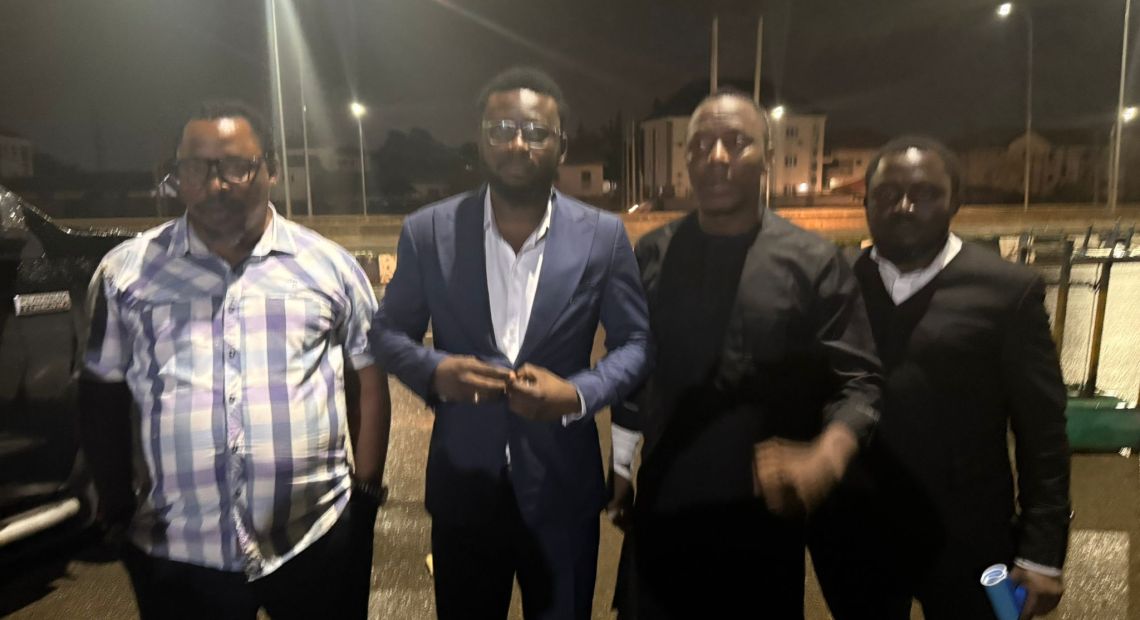

Publisher of Sahara Reporters and former presidential candidate, Omoyele Sowore, regained his freedom on Friday evening after spending two days in police custody, during which he was allegedly brutalised.
Sowore, who was arrested earlier in the week, was said to have sustained a severe injury to his hand after being forcefully dragged by police officers during an attempt to transfer him from his cell. Amnesty International and several human rights groups described his treatment as a blatant violation of human rights and due process.
Protesters, including civil rights activists, had stormed the Nigeria Police Force Headquarters in Abuja on Friday morning, demanding his unconditional release.
The protests came amid reports that the police had filed fresh petitions against him, allegedly at the instance of the Inspector-General of Police (IGP).
Shortly after his release, Sowore went live on Facebook, confirming that he had been freed and thanking Nigerians for their solidarity. He expressed appreciation to political leaders, human rights advocates, and members of the public who spoke out against his detention.
Among the prominent voices was former Vice President Atiku Abubakar, who took to his verified X (formerly Twitter) account to strongly condemn the police’s actions. Atiku described Sowore’s arrest and alleged torture as “a shameful abuse of power,” accusing the police of acting as both complainant and enforcer in clear violation of Police Regulation 367.
“It is appalling that a Nigerian citizen was beaten, had his arm broken, and was sprayed with chemicals by those meant to protect him. This is not just about Sowore; it is an attack on every Nigerian who dares to speak truth to power. This must stop,” Atiku stated.
Atiku also called for urgent reforms to end the misuse of security agencies for political intimidation, warning that continued attacks on free speech and dissent threaten the country’s democracy.
Sowore’s release, according to observers, is seen as a victory for public pressure but also a reminder of the dangers facing journalists, activists, and opposition voices in Nigeria.
